
Fitness vs Movement
On Optimization, Complexity and Adaptation

There’s a question I keep returning to:
What are we actually training for?
In most gyms, the logic is clear.
Lift heavier.Run faster.
Improve numbers.
Track macros.
Optimize recovery.
The body becomes a system of inputs and outputs. Apply the right stimulus, get the desired adaptation.
Fitness works like accounting.
1 + 1 + 1.
Add strength.
Add endurance.
Add flexibility.
Each quality is trained separately.
Each variable measured independently.
And it works.
You get stronger.
You get fitter.
You see measurable progress.
But something feels incomplete.
Fitness Is Linear. Movement Is Relational.

Movement operates differently.
It is not accounting.
It is algebra, even geometry.
As variables increase, relationships increase.
As skills progress, complexity grows.
As coordination improves, the system reorganizes itself.
In fitness, you isolate.
In movement, you integrate.
Fitness improves parts.
Movement increases intelligence between parts.
You can have a strong chest and weak hips.
Strong legs and fragile shoulders.
Excellent cardio and poor coordination.
That is conditional capability.
Strong but only in certain directions.
Life doesn’t move in straight lines.
It twists.
It shifts.
It surprises.
The body is not tested in repetition alone.
It is tested in unpredictability.
It is tested in Chaos
Movement prepares you for the unknown.
Fitness prepares you for the known.
Both have value.But they are not the same.
Optimization vs Adaptation
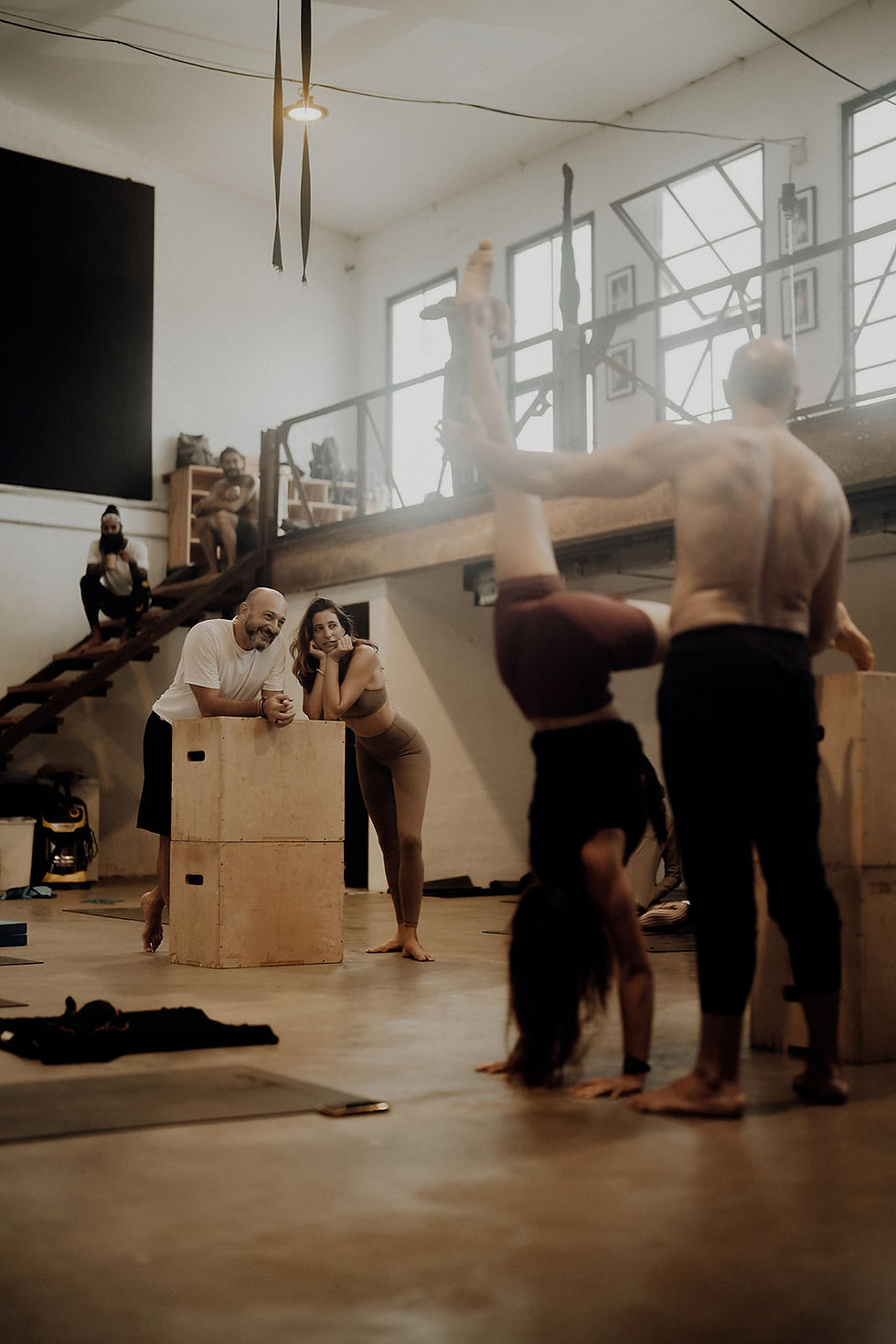
In fitness, progression often means adding load.
In movement, progression often means increasing complexity.
Balance while rotating.
Coordinate while under tension.
Respond while adapting.
The math changes.
It is no longer simple addition.
It becomes dynamic interaction.
Optimization is powerful.
But optimizing isolated variables can reduce complexity.
And the human organism is not a simple equation.
It is a living structure of relationships.
Intelligence Is Adaptation
Our intelligence is not measured by survival alone.
Many species survive.
Human intelligence is measured by adaptation — our ability to reorganize in response to changing environments.
The body has its own intelligence.
And it thrives on new and engaging “games.”
When movement becomes repetitive and predictable, that intelligence narrows.
When movement becomes exploratory and adaptive, it expands.
We need to provide movement food for physical thought.
New angles.
New rhythms.
New relationships with gravity and space.
Movement is not only conditioning.
It is nourishment for the nervous system.
Strength as Structure

Strength is not only how much force you produce.
It is how well force travels through your structure without collapse.
How tension is distributed.
How effectively you adapt under load.
A building is not strong because one beam is massive.
It is strong because the entire structure holds tension together.
Fitness builds components.
Movement builds structure.
And structure determines longevity.
You can optimize muscle mass.
Optimize VO₂ max.
Optimize body fat.
But if coordination declines, adaptability shrinks, and nervous system sensitivity narrows - what have you optimized?
Numbers improved.
Complexity reduced.
Movement increases optionality.
More ways to sit.
More ways to stand.
More ways to fall.
More ways to recover.
More ways to express force.
Complex systems survive through adaptability and not specialization alone.
This is not anti-fitness.
Strength matters.
Load matters.
Progression matters.

But when fitness becomes the whole philosophy, we mistake the instrument for the music.
Fitness adds.
Movement integrates.
Intelligence and wisdom is where longevity lives.
Well at least I tend to think so.
Join the RE²AL Practice
If you’re interested in developing strength, mobility and long-term physical capacity, you can join the RE²AL Practice for updates, ideas and training insights.
Comments